


Specifications
| Top | Spruce |
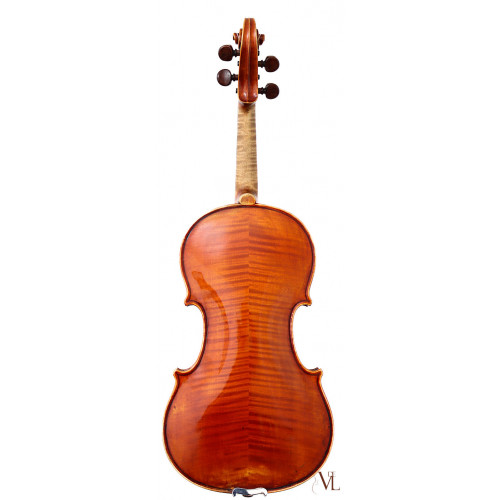
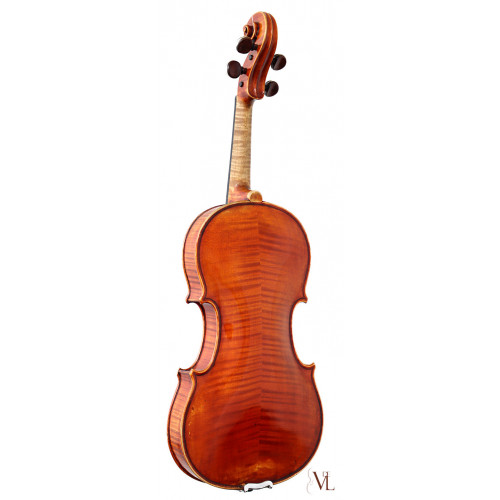
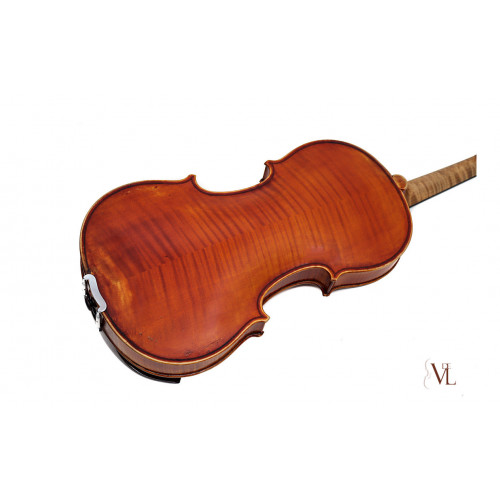
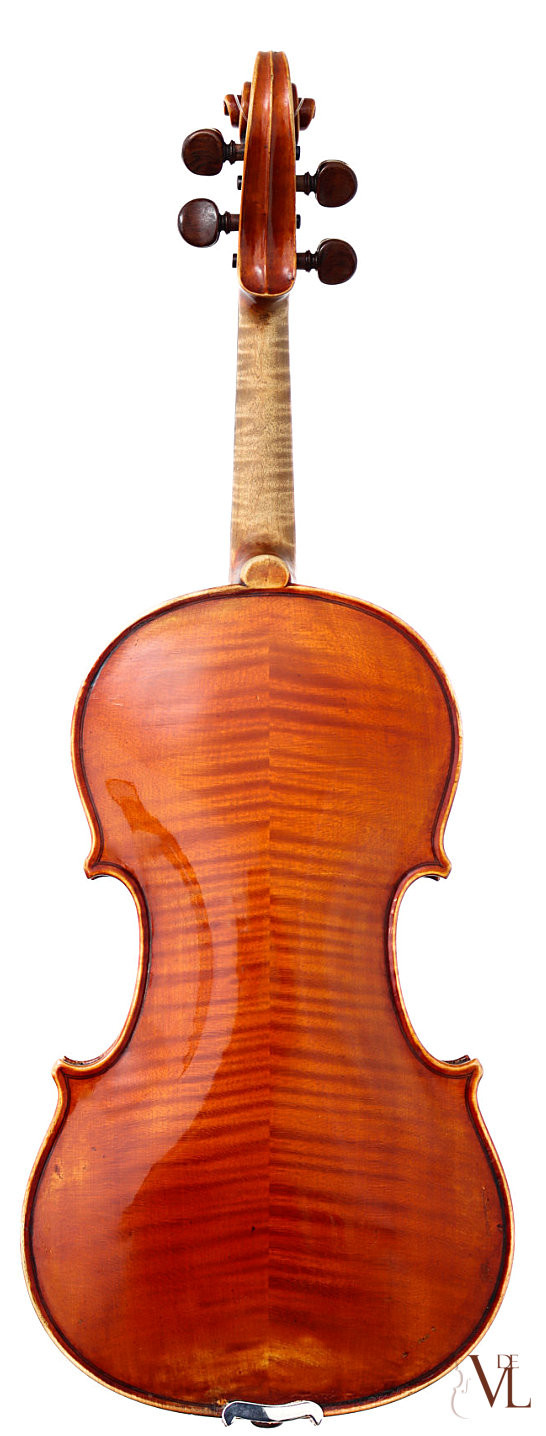
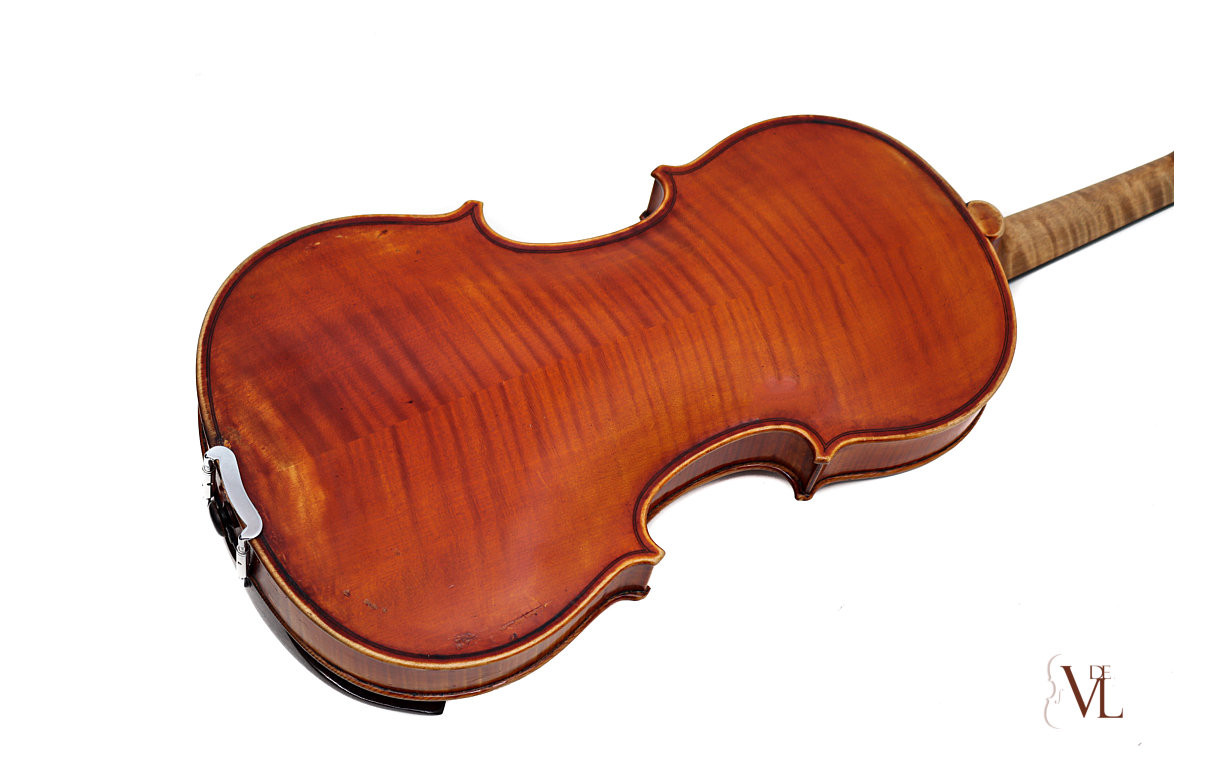
| Back and sides | Flamed maple |
| Varnish | Oil |
| Size | 4/4 |
| Body length | 357 mm |
| Width upper bouts | 172 mm |
| Width lower bouts | 213 mm |
| Minimal CC width | 119 mm |
Available
Luthier: Lorenzo Bergonzi
Model: Vincenzo Sannino
Year of construction: 1960
This Violin has the following certificate:
- Sonor Ltd., UK
Lorenzo Bergonzi, Rome 1960
A Contemporary Interpretation of Vincenzo Sannino
We are pleased to present an interesting Italian violin made in Rome in 1960 by the Mantuan luthier Lorenzo Bergonzi, an instrument that stands out for its carefully executed interpretation of the models of the great Neapolitan master Vincenzo Sannino (1879–1969).
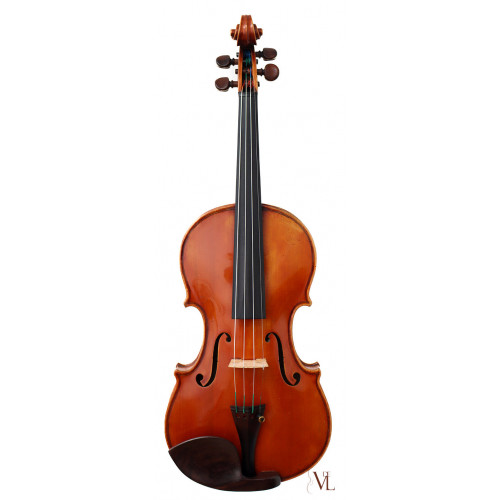
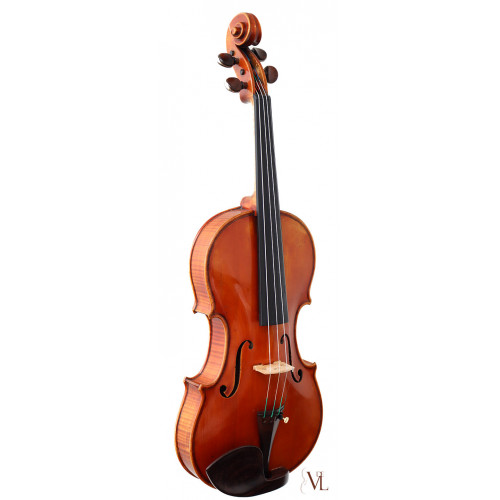
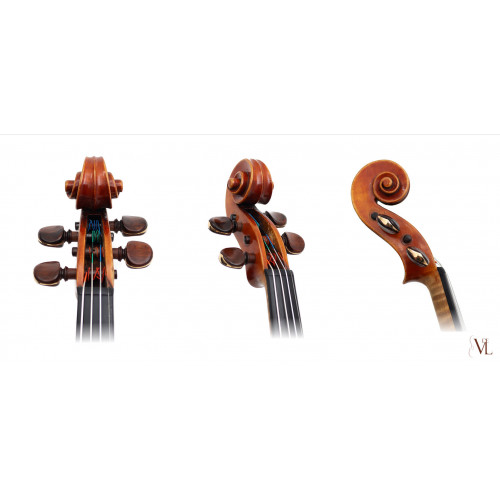
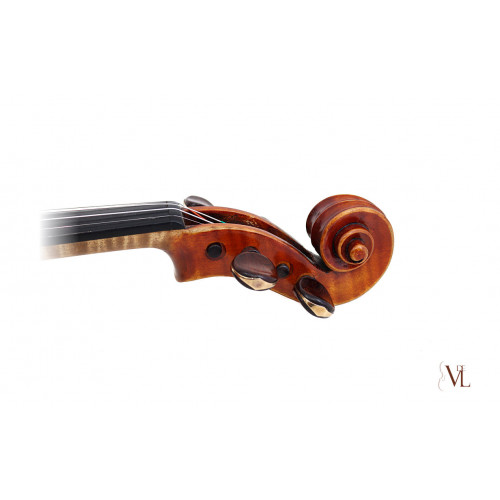
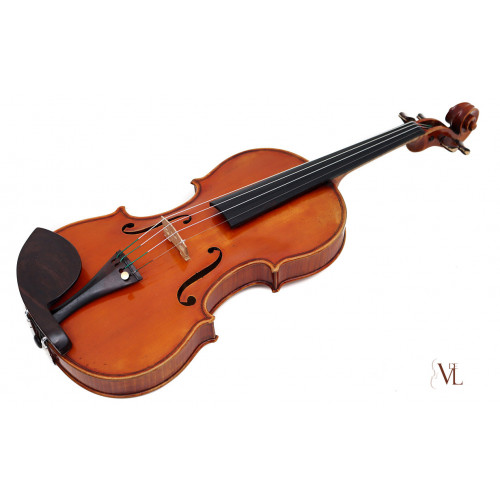
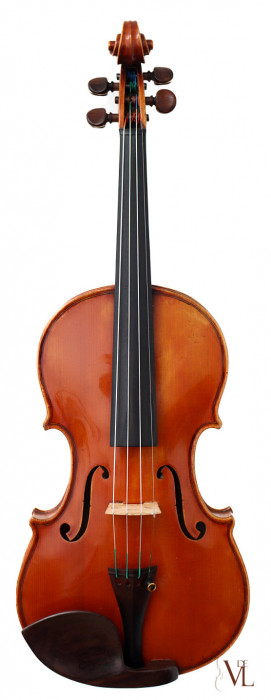
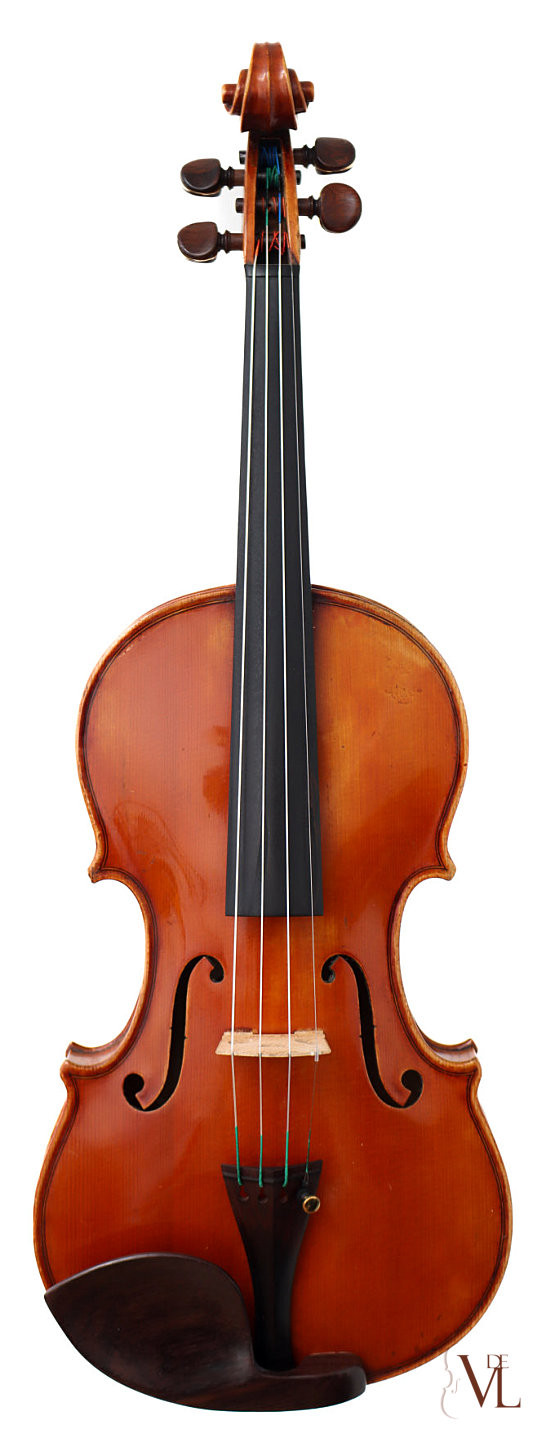
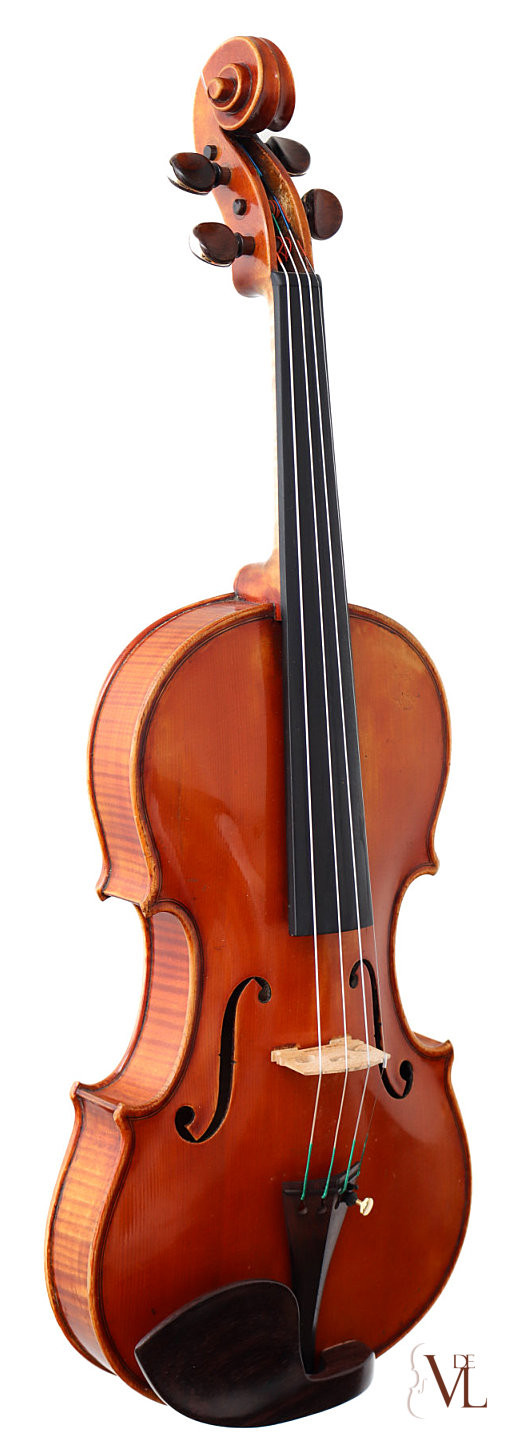
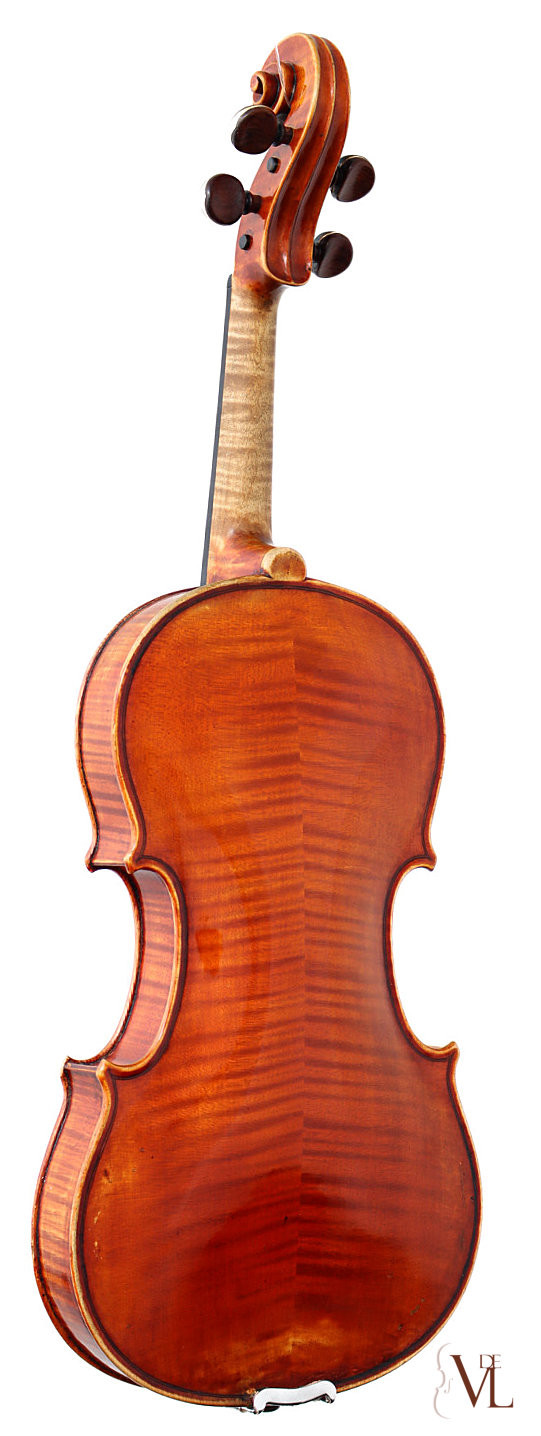
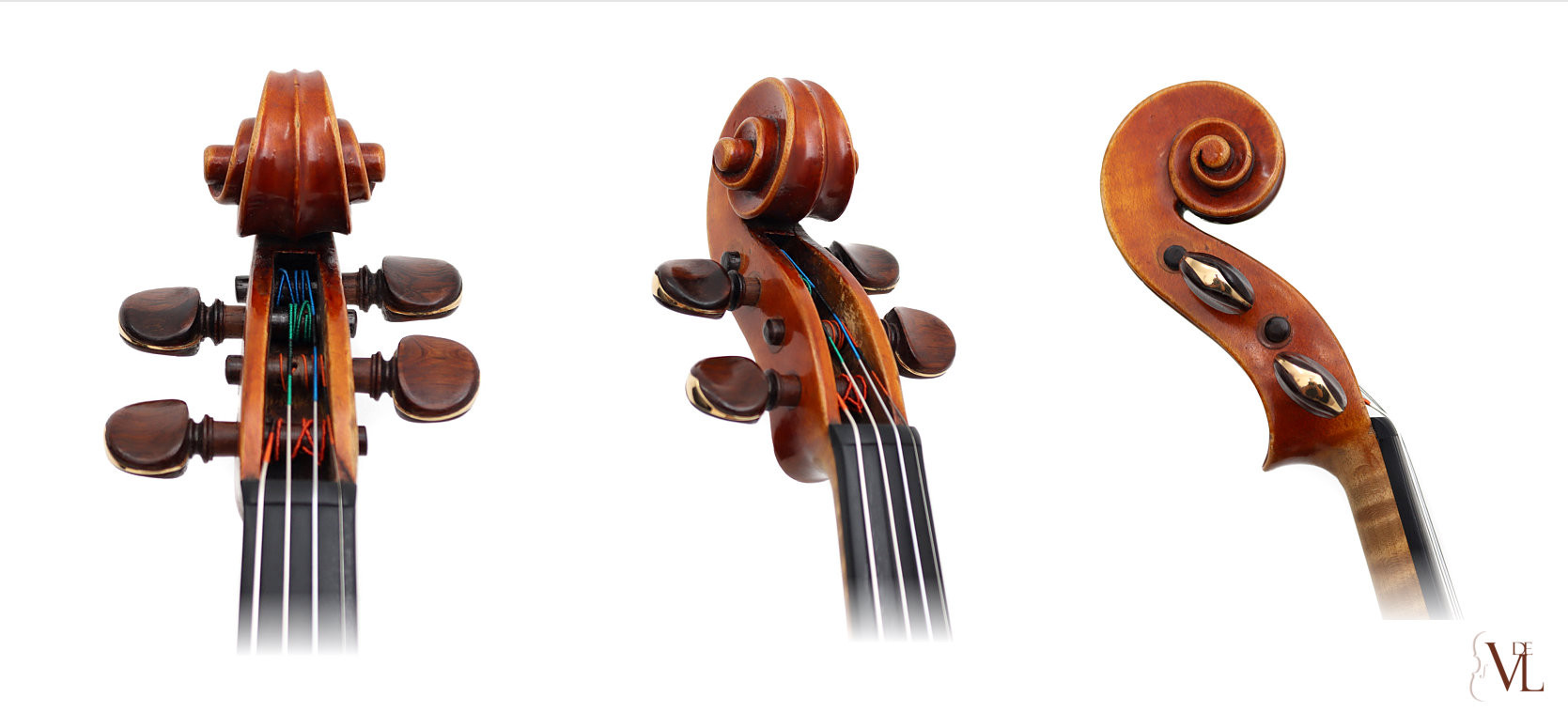
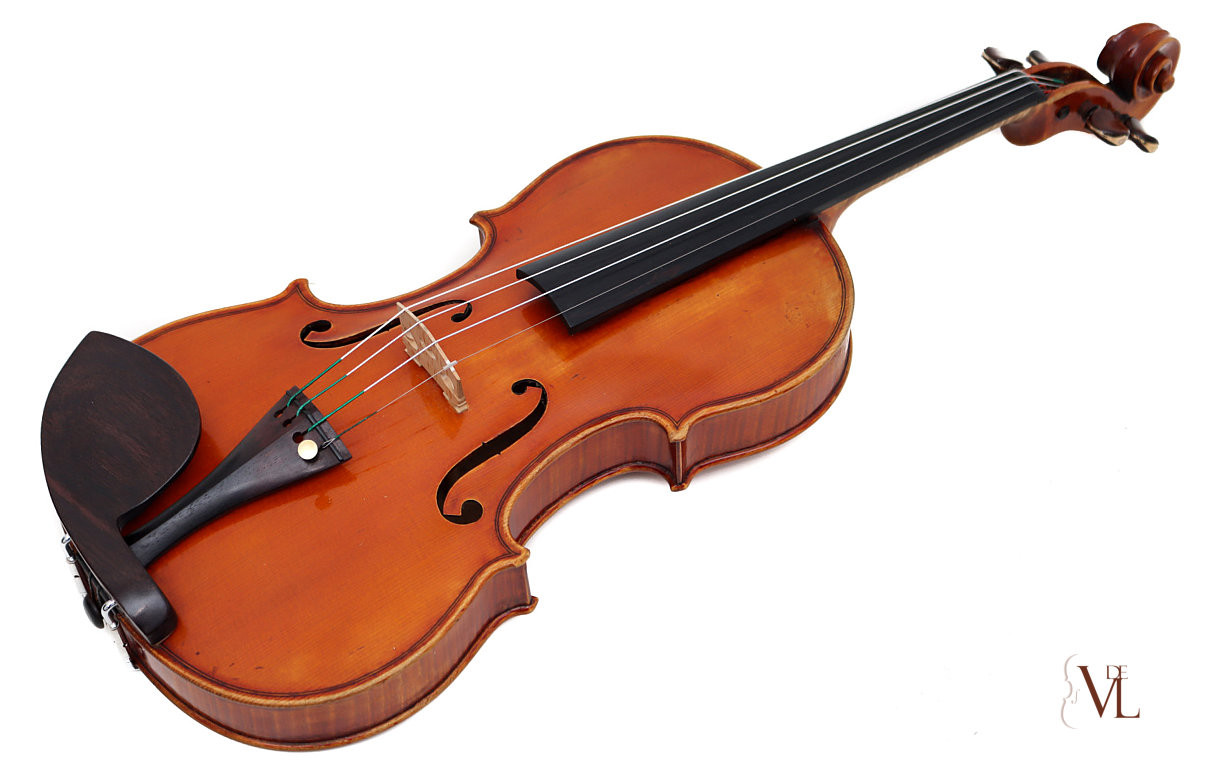
This violin is conceived as a contemporary copy of a Sannino violin, faithfully reproducing the essential characteristics of his distinctive style: the proportions of the model, the design of the f-holes, the arching, the treatment of the details and, particularly, the aesthetic character of the craftsmanship and varnish.
Lorenzo Bergonzi and the Italian Tradition
Lorenzo Bergonzi, originally from Mantua, belongs to that generation of twentieth-century Italian luthiers who kept the tradition of the great classical makers alive through the study and interpretation of historical models.
His work reflects a particularly interesting approach to the Italian tradition: his knowledge of the great models goes beyond simply reproducing their external appearance, seeking instead to translate the proportions, construction details and spirit of the originals into a contemporary instrument.
This violin, made in Rome in 1960, is a fine example of this approach. Bergonzi took Sannino's work as his reference and created his own interpretation, while remaining remarkably faithful to its aesthetic character.
The Influence of Vincenzo Sannino
Vincenzo Sannino holds an important place in the Italian violin-making tradition of the early twentieth century. Born in Naples in 1879 and passing away in Rome in 1969, he began his career as a violinist before turning to violin making. His relationship with the German dealer and expert Fridolin Hamma was particularly significant in broadening his knowledge of the great historical instruments. Through this connection, Sannino gained access to models from several Italian schools, beyond the strictly Neapolitan tradition.
Throughout his career, he produced many original instruments while also becoming known for his copies and interpretations of models by great masters such as Gagliano, Stradivari, Guarneri, Guadagnini, Pressenda and others. His work is particularly notable for the variety of models he studied and interpreted, together with a highly recognisable personal character, even when working from historical instruments.
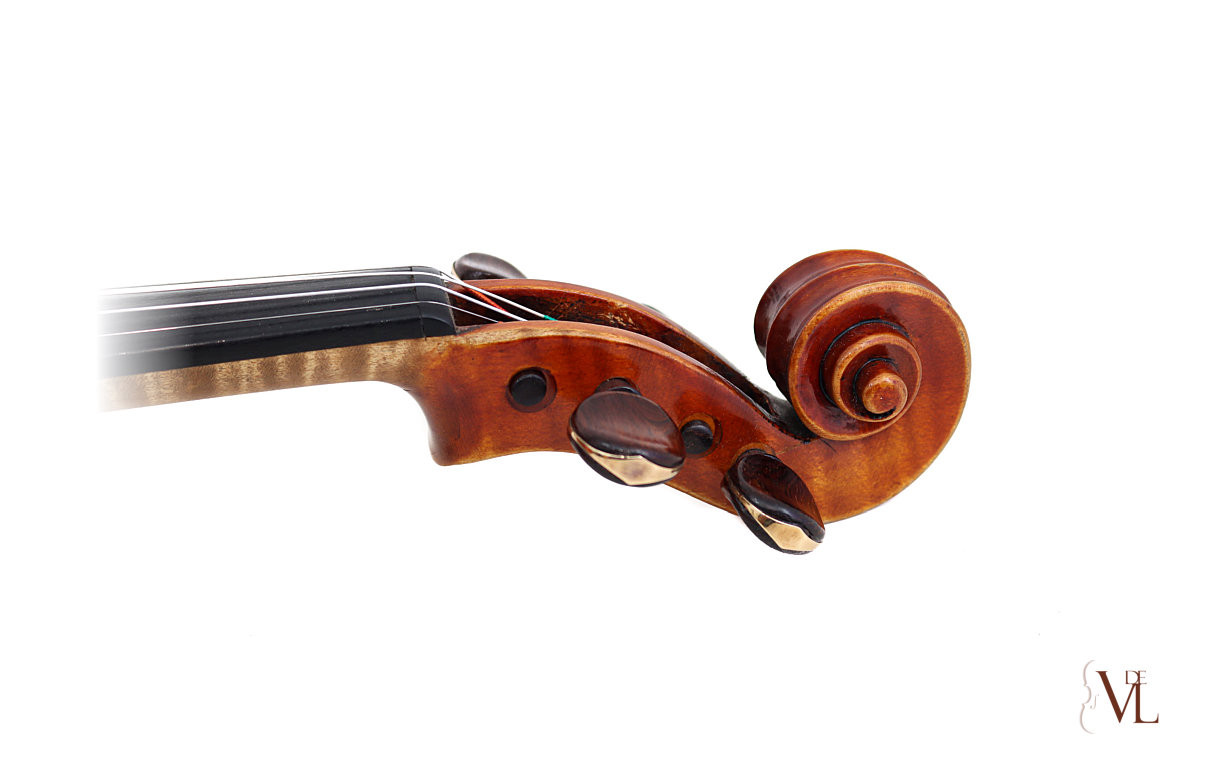
One of the most appealing aspects of Sannino's work is his ability to combine the Neapolitan tradition with a broader understanding of Italian violin making. His instruments often feature beautifully worked varnish, frequently with an intentionally antiqued appearance, together with highly individual characteristics in the f-holes, scrolls and overall modelling.
A Sannino Interpreted by Bergonzi
The particular interest of this 1960 violin lies precisely in the relationship between historical model and contemporary creation. Bergonzi does not merely reproduce Sannino's work as a decorative copy; rather, he studies Sannino's distinctive language and translates it into a twentieth-century instrument, preserving its principal stylistic and formal characteristics.
Visually, the violin possesses a strong personality, with elegant and well-balanced lines and craftsmanship that immediately evokes Sannino's distinctive world. The choice of model and the fidelity with which its individual elements have been interpreted make this violin particularly appealing to those who value the Italian tradition and, in particular, the Neapolitan school.
A Warm, Powerful and Expressive Voice
From a tonal perspective, this violin offers the qualities sought in a fine Italian instrument of classical tradition: an immediate response, a warm and rounded voice, excellent projection and a notable richness of overtones.
Its sound displays a very pleasing balance across the strings, with a full and deep lower register and clear, singing upper notes with excellent carrying power. The response under the bow is agile and allows the player to explore a wide range of colours and dynamics.
Particularly attractive is its ability to produce a flexible and expressive sound, capable of maintaining presence and clarity in a concert hall without losing the warmth and depth associated with this type of instrument.
Ultimately, this is a violin that combines the character of a mid-twentieth-century Italian instrument with the fascinating tradition of Vincenzo Sannino's models.
An Instrument to Discover and Enjoy
This Lorenzo Bergonzi, Rome 1960, represents a particularly interesting opportunity for players and collectors looking for an Italian instrument with character, history and a clear connection to one of the important names of twentieth-century Neapolitan violin making.
A faithful interpretation of Vincenzo Sannino's style, made by an Italian luthier from Mantua and crafted in Rome in 1960, offering a mature, warm and expressive voice.
An instrument that brings together Italian tradition, craftsmanship and a fascinating interpretation of one of the most distinctive styles in twentieth-century Italian violin making.
Model: Vincenzo Sannino
Year of construction: 1960
This Violin has the following certificate:
- Sonor Ltd., UK
Lorenzo Bergonzi, Rome 1960
A Contemporary Interpretation of Vincenzo Sannino
We are pleased to present an interesting Italian violin made in Rome in 1960 by the Mantuan luthier Lorenzo Bergonzi, an instrument that stands out for its carefully executed interpretation of the models of the great Neapolitan master Vincenzo Sannino (1879–1969).
This violin is conceived as a contemporary copy of a Sannino violin, faithfully reproducing the essential characteristics of his distinctive style: the proportions of the model, the design of the f-holes, the arching, the treatment of the details and, particularly, the aesthetic character of the craftsmanship and varnish.
Lorenzo Bergonzi and the Italian Tradition
Lorenzo Bergonzi, originally from Mantua, belongs to that generation of twentieth-century Italian luthiers who kept the tradition of the great classical makers alive through the study and interpretation of historical models.
His work reflects a particularly interesting approach to the Italian tradition: his knowledge of the great models goes beyond simply reproducing their external appearance, seeking instead to translate the proportions, construction details and spirit of the originals into a contemporary instrument.
This violin, made in Rome in 1960, is a fine example of this approach. Bergonzi took Sannino's work as his reference and created his own interpretation, while remaining remarkably faithful to its aesthetic character.
The Influence of Vincenzo Sannino
Vincenzo Sannino holds an important place in the Italian violin-making tradition of the early twentieth century. Born in Naples in 1879 and passing away in Rome in 1969, he began his career as a violinist before turning to violin making. His relationship with the German dealer and expert Fridolin Hamma was particularly significant in broadening his knowledge of the great historical instruments. Through this connection, Sannino gained access to models from several Italian schools, beyond the strictly Neapolitan tradition.
Throughout his career, he produced many original instruments while also becoming known for his copies and interpretations of models by great masters such as Gagliano, Stradivari, Guarneri, Guadagnini, Pressenda and others. His work is particularly notable for the variety of models he studied and interpreted, together with a highly recognisable personal character, even when working from historical instruments.
One of the most appealing aspects of Sannino's work is his ability to combine the Neapolitan tradition with a broader understanding of Italian violin making. His instruments often feature beautifully worked varnish, frequently with an intentionally antiqued appearance, together with highly individual characteristics in the f-holes, scrolls and overall modelling.
A Sannino Interpreted by Bergonzi
The particular interest of this 1960 violin lies precisely in the relationship between historical model and contemporary creation. Bergonzi does not merely reproduce Sannino's work as a decorative copy; rather, he studies Sannino's distinctive language and translates it into a twentieth-century instrument, preserving its principal stylistic and formal characteristics.
Visually, the violin possesses a strong personality, with elegant and well-balanced lines and craftsmanship that immediately evokes Sannino's distinctive world. The choice of model and the fidelity with which its individual elements have been interpreted make this violin particularly appealing to those who value the Italian tradition and, in particular, the Neapolitan school.
A Warm, Powerful and Expressive Voice
From a tonal perspective, this violin offers the qualities sought in a fine Italian instrument of classical tradition: an immediate response, a warm and rounded voice, excellent projection and a notable richness of overtones.
Its sound displays a very pleasing balance across the strings, with a full and deep lower register and clear, singing upper notes with excellent carrying power. The response under the bow is agile and allows the player to explore a wide range of colours and dynamics.
Particularly attractive is its ability to produce a flexible and expressive sound, capable of maintaining presence and clarity in a concert hall without losing the warmth and depth associated with this type of instrument.
Ultimately, this is a violin that combines the character of a mid-twentieth-century Italian instrument with the fascinating tradition of Vincenzo Sannino's models.
An Instrument to Discover and Enjoy
This Lorenzo Bergonzi, Rome 1960, represents a particularly interesting opportunity for players and collectors looking for an Italian instrument with character, history and a clear connection to one of the important names of twentieth-century Neapolitan violin making.
A faithful interpretation of Vincenzo Sannino's style, made by an Italian luthier from Mantua and crafted in Rome in 1960, offering a mature, warm and expressive voice.
An instrument that brings together Italian tradition, craftsmanship and a fascinating interpretation of one of the most distinctive styles in twentieth-century Italian violin making.
warranties of VIOLINES de Luthier


Violines
Violas & Cellos
Courses
Accesories
Information